Best Sanding Sheets for Clarke DU-8 Drum Sander
By Matt Lipman · Reviewed by Professional Sandpaper Guide editorial team · Updated May 28, 2026 · NWFA-aligned
Affiliate & relationship disclosure
Matt Lipman is CEO of Capstone Holdings Corp. (NASDAQ: CAPS) and a board member of Virginia Abrasives. He discloses this relationship for full transparency in our reviews.

The Clarke DU-8 uses 8 × 19.5-inch clamping-bar sheets. Run the NWFA sequence — 36, 60, 80, 100 grit — and budget 16 to 19 sheets total for a 400 sq ft room. This guide covers DU-8-specific machine setup, sheet loading, troubleshooting, and the rental counter inspection most rental shops won’t walk you through. For cross-brand sheet comparison (Virginia Abrasives vs Norton vs 3M), see our drum sheet brand comparison.
Three pre-rental checks
Before you sign the rental agreement:
- Engineered vs solid? Engineered with <3mm wear layer = no DU-8, ever. Check.
- Pre-1978 house? Lead test before any sanding. Why.
- Two separate 15A circuits? Sander + HEPA vac on the same circuit trips every five minutes. Setup.
For the full step-by-step process, see how to sand hardwood floors.
Clarke DU-8 Specifications
| Specification | Value |
|---|---|
| Drum Width | 8 inches |
| Sheet Size | 8 × 19.5 inches (clamping bar) |
| Motor | 1.5 HP |
| RPM | 1725 (fixed) |
| Startup current | 13–15 amps |
| Weight | ~72 lbs |
| Best For | 200–800 sq ft residential refinish |
DU-8 rental counter inspection — 90 seconds before you sign
Rented DU-8s vary in condition. Two minutes at the counter saves three hours at home.
- Drum balance. Spin the drum slowly by hand (motor off, machine tilted back). Any wobble, ticking, or uneven resistance = ask for a different machine. An out-of-balance drum prints chatter marks every revolution and you can’t fix it with technique.
- Clamping bar. Open it, close it, open it again. Should hinge smoothly and lock tight. Sloppy lock = sheet slips mid-pass.
- Drum surface. Should be clean. Old adhesive residue on the drum surface means the next sheet won’t seat square. Ask the rental shop to wipe it with mineral spirits if there’s buildup.
- Dust bag and zipper. Zipper has to fully close — a quarter-inch gap and you’ll be wiping dust off the room for a week.
- Power cord — full length. Run it through your fingers tip to tip. Any nick or repaired-with-electrical-tape section = swap the machine. Drum sanders pull enough current that a damaged cord is a real fire risk.
- Tilt mechanism. Tilt the drum up and down twice. Should hold position when released. Loose tilt = drum drops to the floor when you don’t want it to, which is how floors get dished.
If anything fails: ask for the next DU-8 in the rack. Rental clerks would rather swap a unit than handle a complaint when you bring it back.
Sheet size — 8 × 19.5 inches
The DU-8 uses a clamping bar that holds sheets exactly 8 inches wide (matching the drum) and 19.5 inches long. This size also fits:
- Clarke EZ-8 (older clamping-bar version) — EZ-8 guide
- Hiretech HT8
It does not fit the newer EZ-8 (expandable drum uses 8×19” belts) or the Silverline SL-8 (uses 8×20-1/8” sheets). Verify the model name on the rental agreement before buying sheets.
How to load sheets on the DU-8
A poorly loaded sheet slips, wrinkles, or tears mid-pass — and every one of those causes drum marks in the floor.
- Turn off the machine and unplug it. Always.
- Open the clamping bar at one end of the drum. The bar hinges down to expose the drum surface.
- Slide the new sheet under the clamping bar, aligning the short edge with the edge of the drum. The 8-inch width should match the drum exactly.
- Tighten the clamping bar with the lever or knob. Snug, but don’t over-tighten — over-force strips the clamping mechanism.
- Walk the machine forward gently (unplugged) to check for wrinkles or bunching. The sheet should wrap smoothly around the drum.
- Trim or fold any excess at the trailing edge so nothing catches.
Tip: load the fresh sheet before you finish the current one. You’ll be in a rhythm and won’t fumble when you need to change mid-room.
Sheet quantity — measure first
For the full math (per-square-foot formulas, species multipliers, ceramic-grain economics), see our sheet calculator.
Quick baseline (red oak, normal condition):
| Room size | 36 grit | 60 grit | 80 grit | 100 grit (opt) |
|---|---|---|---|---|
| 250 sq ft | 3 | 2 | 2 | 2 |
| 400 sq ft | 4–5 | 3 | 3 | 3 |
| 600 sq ft | 6–8 | 4 | 4 | 4 |
Adjust: +50% on 36 grit for heavy old polyurethane. +25% across all grits for hard maple/hickory. Engineered (>3mm) — 100 grit only, light pressure.
Add one extra sheet per grit as insurance.
Buy the counts above (50-packs, affiliate): 36 grit 50-pack · 60 grit 50-pack · 80 grit 50-pack · 100 grit 50-pack — per-grit prices and cards are below.
For brand picks at each stage (VA for cut, Norton for finish when staining), see our drum sheet brand comparison.
DU-8-specific troubleshooting
Sheet wrinkles after the first 50 sq ft
Tension was set too high — clamping bar over-tightened. Loosen one notch, re-tension. The sheet should have very slight give under finger pressure, not be drum-tight.
Parallel chatter marks every few inches across the floor
Drum is out of balance. Not fixable in the field — return the machine and ask for a different one. If you bought the rental shop’s last DU-8, ask if they have an EZ-8 or HT8 (same sheet size, similar machine).
Vacuum suction dropping mid-pass
Either the dust bag is full OR the gasket between bag and machine is missing or torn. Empty the bag outside (into a metal lidded can — never indoors). If the gasket is missing or torn, tape over the gap with duct tape as a field fix and report it on return.
Burning smell
Stop immediately. Either the drum is glazed (sheet worn smooth and generating heat — change it) or the motor is overheating (let it sit 15 minutes unplugged before resuming). Burning smell + smoke = unplug and walk away; that’s the start of a fire.
Drum drops when you let go of the tilt handle
Worn tilt mechanism. Hold the handle the entire pass — never let go while the drum is over the floor. Report on return; the next renter shouldn’t get this machine without service.
Sheet slips during operation
Clamping bar isn’t tight enough, or the drum surface has adhesive residue from previous sheets preventing proper seating. Re-clamp first; if that doesn’t fix it, clean the drum surface with mineral spirits on a rag.
DU-8 sanding technique
- Sand with the grain. Check the room layout and sand along the longest dimension.
- Overlap your passes by 3–4 inches to avoid striped patterns and missed spots.
- Use steady walking pace. Don’t push the machine — let the weight and drum speed do the work.
- Keep the drum moving. Never start or stop the machine while it’s in contact with the floor. Hand on the tilt lever every time you slow down. Lift before stop. Always.
- Sand the edges separately with an edger or by hand after the main sanding.
- Empty the dust bag frequently. Outside, into a metal can with a lid. Compressed wood dust + oxygen = fire risk.
For dust safety (P100 respirator, HEPA extraction, HVAC fully off and taped, fire risk), see the dust + health section in the pillar article.
DU-8 vs. other 8” drum sanders
| Machine | Sheet size | Versus DU-8 |
|---|---|---|
| Clarke EZ-8 (older clamp-bar) | 8 × 19.5” | Same size sheets; near-identical operation |
| Clarke EZ-8 (newer expandable) | 8 × 19” belts | Different format; belts loop the drum |
| Hiretech HT8 | 8 × 19.5” | Same size sheets; slightly different vacuum |
| Silverline SL-8 | 8 × 20-1/8” | Different sheet size; same class of machine |
| Lagler Hummel | 7-7/8” × 29-1/2” belt | Professional belt sander; more powerful, more expensive |
See the EZ-8 guide, SL-8 guide, and Lagler Hummel guide for the alternatives.
When to replace a sheet
A sheet is done when:
- The machine stops removing wood and starts generating heat (you can feel it in the handle)
- You see visible dust clouds instead of chips being vacuumed
- The abrasive surface feels smooth to the touch (grain worn flat)
- You’re making multiple passes without visible progress
Replace before completely dull — a glazed sheet doesn’t cut wood, it burnishes the surface and closes the grain. Burnished spots reject stain and create blotches.
Current prices
VA 36-grit 8×19-1/2 drum sheets (50-pack)
First-pass stripping for the DU-8 / EZ-8 clamp / HT8.
from ~$106.37 (≈$2.13/sheet, 50-pack · 4.5★)
See 50-pack offers on Amazon →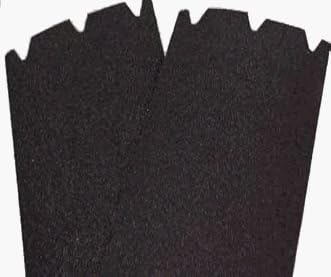
VA 60-grit 8×19-1/2 drum sheets (50-pack)
Second-pass cut. Erases 36-grit scratches.
from ~$116.50 (≈$2.33/sheet, 50-pack · 4.4★)
See 50-pack offers on Amazon →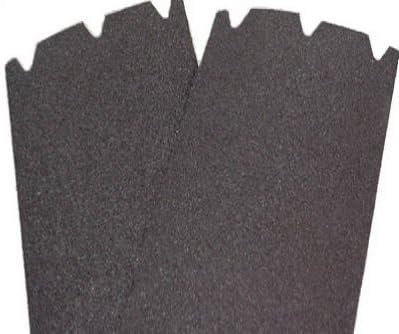
VA 80-grit 8×19-1/2 drum sheets (50-pack)
Workhorse smoothing pass.
$70.97 (≈$1.42/sheet, 50-pack · 4.6★)
Buy on Amazon →VA 100-grit 8×19-1/2 drum sheets (50-pack)
Final drum pass for clear poly. For stain or water-based, Norton closed-coat is better at this grit.
$89.00 (≈$1.78/sheet, 50-pack · 5.0★)
See 50-pack offers on Amazon →Prices pulled from Amazon at publish; verify before ordering. Several listings open on Amazon’s “See All Buying Options” screen — click it to see the current offer. The 50-pack runs 3–4× cheaper per sheet than rental-counter singles, and coarse grits keep for the next job. Amazon Associate disclosure: we earn from qualifying purchases.
Inspect the machine at the counter, load the sheet square, keep the drum moving, lift before stop. The DU-8 is the most forgiving rental drum in the fleet — don’t fight it.
Matt.
Frequently Asked Questions
What size sandpaper does the Clarke DU-8 use? ▼
The Clarke DU-8 uses 8×19.5 inch clamping-bar sheets. This is the same size used by the older clamping-bar version of the Clarke EZ-8 and the Hiretech HT8.
How do I load sheets on the DU-8? ▼
Open the clamping bar, slide the sheet under it with edges aligned, and tighten the lever. Roll the machine forward gently to check for wrinkles before sanding. A wrinkled sheet causes drum marks.
How many DU-8 sheets do I need for 400 square feet? ▼
For a 4-grit sequence on 400 square feet: 5–6 sheets at 36 grit, 4–5 at 60, 3–4 at 80, and 3–4 at 100. Total: approximately 16–19 sheets. Buy a few extra at 36 grit — coarse sheets wear fastest.
What should I check on a DU-8 at the rental counter? ▼
Drum balance (no wobble when spun by hand), clamping bar locks tight, dust bag zipper closes fully, power cord intact, tilt mechanism holds position. Two minutes at the counter saves three hours at home.
Related Guides
- Best Drum Sander Sheets 8×19.5: VA vs Norton vs 3M— Best 8×19.5 drum sheets compared: Virginia Abrasives, Norton, 3M ranked by stage…
- Best Sandpaper for Hardwood Floor Refinishing— Best sandpaper for hardwood floor refinishing: Virginia Abrasives vs Norton vs 3…
- Best Sandpaper for Removing Paint from Wood Floors— Removing paint from wood floors: 24-36 grit start, open-coat sheets, lead testin…
- Clarke EZ-8 Sandpaper Size Guide: Both Versions, Specs— Clarke EZ-8 sandpaper: older clamp-bar uses 8×19.5 sheets, newer expandable drum…
- Clarke Super 7R Edger: Specs, Disc Sizes, Variable Speed— Clarke Super 7R edger guide: 7-inch discs, 7/8 vs 5/16 center hole, variable spe…
- Floor Sanding Edger Discs 7-Inch: VA vs Norton vs 3M— Best 7-inch edger discs compared: VA, Norton, 3M by stage. PSA vs hook-and-loop.…
- Drum Marks, Swirl Marks, Scratches: Floor Sanding Fixes— Fix common floor sanding problems including drum marks, swirl marks, and scratch…
- How to Sand Hardwood Floors with a Rental Sander— Sanding hardwood floors with a rental drum sander: NWFA grit sequence, dust and …
- Lagler Hummel Belt Sander: Belt Sizes, When It's Worth It— Lagler Hummel guide: 7-7/8 × 29-1/2 belts, rental inspection, honest when-it-jus…
- Deck Sandpaper: CCA Check, Grits, Strip-or-Sand— Deck sanding by wood type with CCA/lead checks: PT pine 60-80-120, cedar 80-120-…
- Free Sandpaper Grit Chart PDF: Every Grit, Every Material— Printable sandpaper grit chart PDF — which grit for wood, drywall, metal, paint.…
- How Much Sandpaper Do I Need? (Sheet Calculator by Room)— Sandpaper sheet calculator for floor sanding — drum sheet and edger disc counts …
- Silverline SL-8 Sandpaper: 8×20-1/8 Size Guide— Silverline SL-8 slotted drum takes 8×20-1/8 sheets; the hook-and-loop drum takes…
- Sandpaper Backing, Bonding & Coating: What They Mean— Beyond grit: how sandpaper backing (paper vs cloth), bonding resin, and open vs …
Shop Virginia Abrasives on Amazon
Drum sander sheets, edger discs, polishing pads, grit kits. U.S. manufactured. Free Prime shipping on most items.
Browse Virginia Abrasives →